
Leiko Ikemura

Aquí Estamos

March 8th — July 3rd

Puerto Banús, Marbella.  

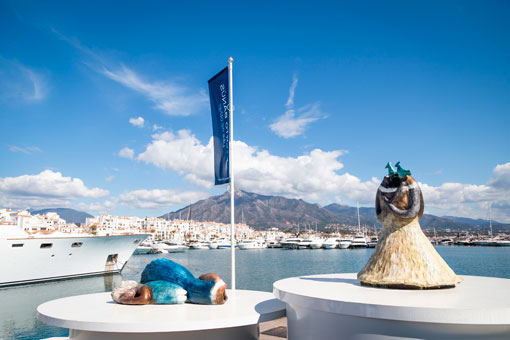
Con la exposición internacional ‘Aquí estamos’ de la artista japonesa Leiko Ikemura, la Ciutat de les Arts i les Ciències de Valencia presenta la muestra escultórica más significativa de la artista hasta el momento en España. La importancia de este conjunto de esculturas se ve amplificada en el entorno de Puerto Banús, abrigadas por el mar Mediterráneo, la icónica Torre de Control de la marina, los yates de gran eslora atracados en sus muelles, y una Sierra Blanca a lo lejos que permite disfrutar al aire libre de arte y naturaleza en sintonía, transmitiendo a través de estas esculturas mensajes de misericordia, compasión y ensoñación.

La muestra de la artista japonesa Leiko Ikemura está compuesta por seis esculturas balanceadas entre la espiritualidad y la compasión. ‘Aquí estamos’ es la exhibición escultórica más significativa de la artista . Una exposición gratuita y al aire libre que aúna arte y cultura en un mismo espacio.  

Las seis esculturas de bronce con pátinas de color lucirán en el puerto deportivo de lujo. Usagi Greeting, Figure with three Birds, Double Figure, Cat Girl Lying, Lying Girl, y Catgirl with Usagi son las piezas de quien en 2001 recibiría el Premio de la Asociación de Críticos de Alemania.

Más información:
Leiko Ikemura

Leiko Ikemura Exhibition
Once again, the Ciutat de les Arts i les Ciències de Valencia will collaborate with Puerto Banús in the cession of its works. ’My Secret Garden’ by Belgian artist Arne Quinze was the first collaboration between the museum and the port. With this kind of initiatives, Ciutat de les Arts i les Ciències brings art closer to other cities and audiences.


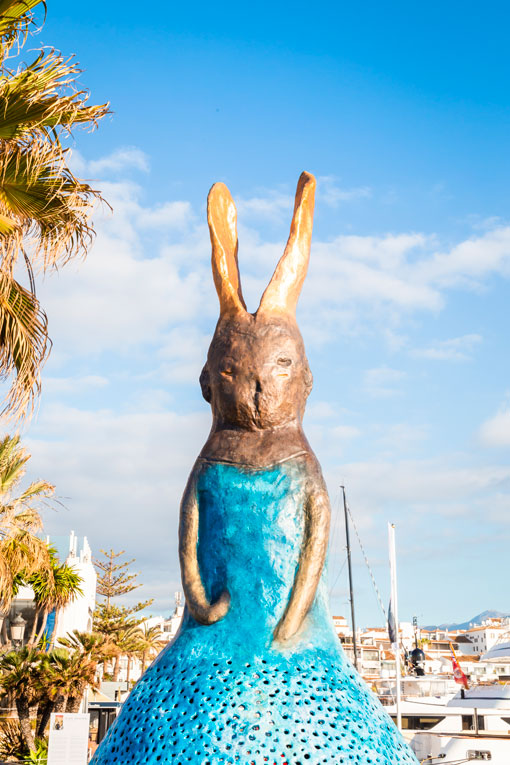
Children’s beauty, fluffed among flowers. Leiko Ikemura’s exhibition is made up of flowers represented by children’s figures that, in full development, long for another world. Without going any further, Usagi Greeting, represented with a hare’s head and human body, possesses in her interior a hollow space where any child can take shelter from the world around him and return to the maternal protection prior to his birth.


‘Aquí Estamos’ invites us to reflect on spirituality from a universal perspective and from femininity. A figure-temple of welcome, with a philosophy of acceptance and embrace of motherhood and the various beings born into this world or yet to be born. Crossing the boundaries between cultures, it combines characteristics of European art and the Eastern world.
The Japanese artist’s exhibition thematises and promotes the fusion of man and nature in a hybrid being that evokes feelings of strangeness and sympathy, of estrangement and familiarity at the same time. It symbolises a tribute to women from childhood and a call for the hope of universal equality, without limitations of race, colour or identity.


As a European tourist reference, Puerto Banús demonstrates its commitment to culture and awareness. Two fundamental pillars in the human development of any human being.
Leiko Ikemura Exhibition

Biography

Leiko Ikemura was born in Tsu, Mie Prefecture, Japan. Lives and works in Berlin. In 1970 she began her studies at the University of Osaka, Japan, where she remained until 1972. That same year she left Japan to study Hispanic philology in Granada and Salamanca, after initially studying Spanish language and literature at the University of Osaka. 


After her arrival in Germany in 1985, Ikemura’s work began a very personal path. Her female figures detached from reality and her cosmic landscapes inhabited by fantastic creatures are the result of a creator who embraced Western art only to become aware of her Eastern roots and, finally, to reconcile both cultures.


In her most recent works, Ikemura pursues her longing for a fusion between man and nature. Landscapes of marked melancholic evocation, rooted in the soul and belonging to the territory of the oneiric coexist, in recent years, with emerging morphologies and formal metamorphoses that allude to the artist’s early works.

PHOTO GALLERY «AQUÍ ESTAMOS»